


What is Eyelid Swelling: Causes, Symptoms, and Treatment Methods
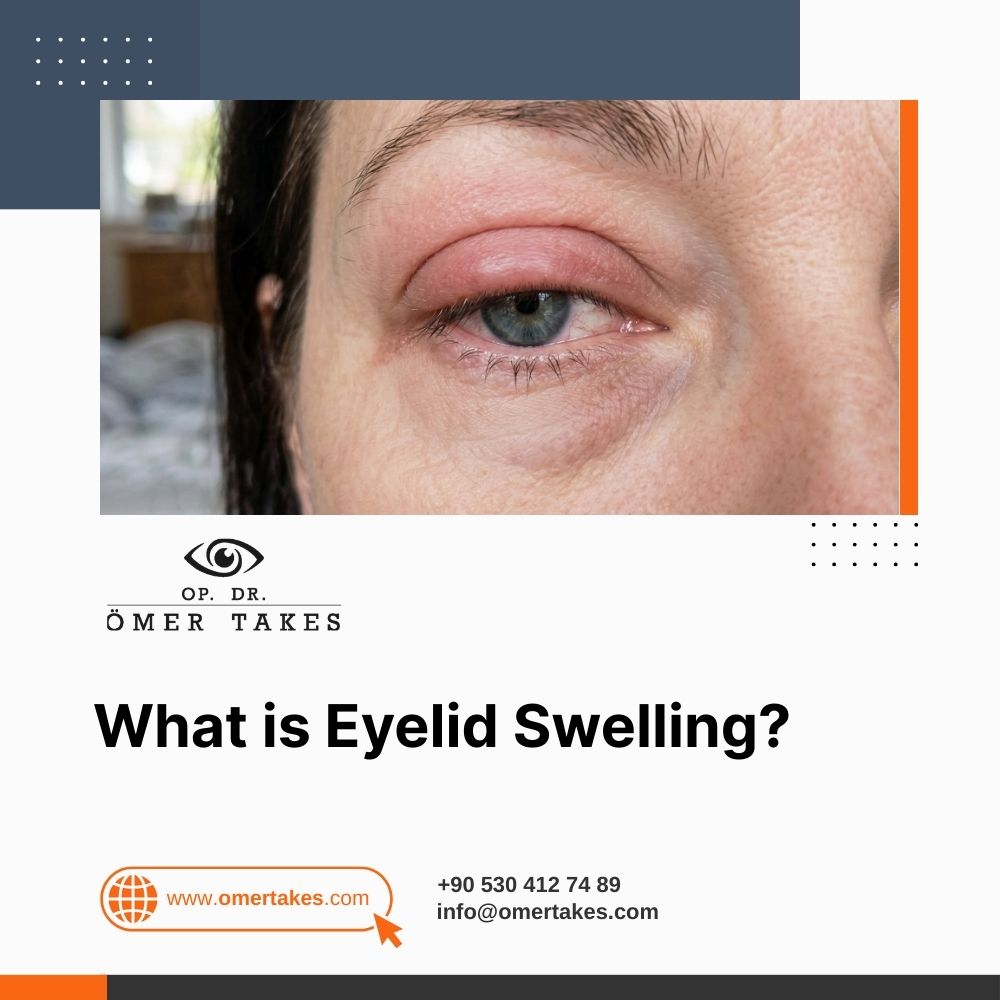
What is Eyelid Swelling?
Eyelid swelling is the occurrence of puffiness or a bump on the eyelid due to fluid accumulation in the soft tissues surrounding the eye. This condition, which is often temporary, can also be a harbinger of more serious health problems.
The eye area is one of the most sensitive parts of the body, and swelling not only creates an aesthetic problem but can also lead to more significant health issues such as vision loss or infection.
In this article, we will discuss the causes, symptoms, treatment methods, and natural home remedies for eyelid swelling in detail. If you would like to get information about our services, you can easily contact us.
Causes of Eyelid Swelling
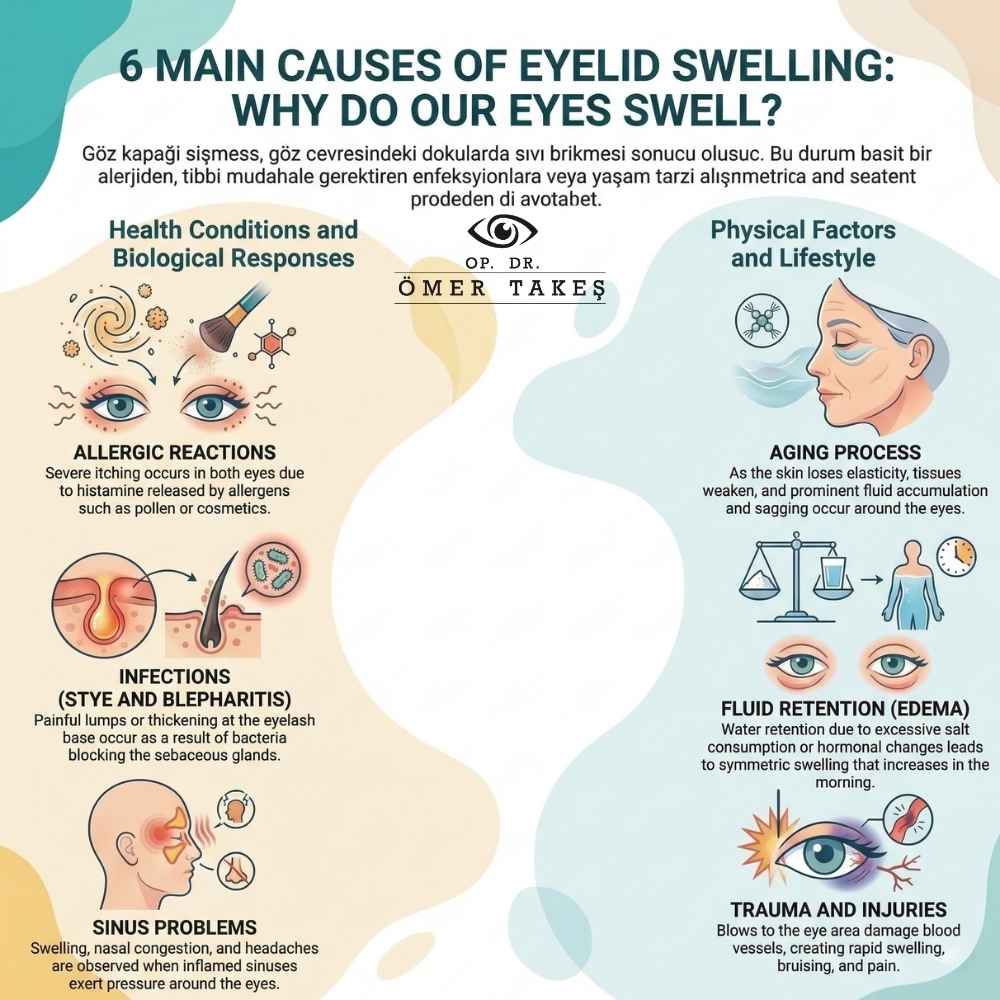
There can be multiple causes for swelling on the eyelid. These reasons can often be simple and temporary conditions, or they can be symptoms of more complex health issues. Here are the main causes that can lead to a swollen eyelid:
1. Allergic Reactions
Allergic reactions are one of the most common conditions causing the eyelid to swell. Allergens such as pollen, dust, pet dander, or chemicals in cosmetic products can lead to eyelid swelling. Allergic reactions are usually accompanied by itching, redness, and watery eyes. These reactions are mostly seasonal and can be more severe during certain periods.
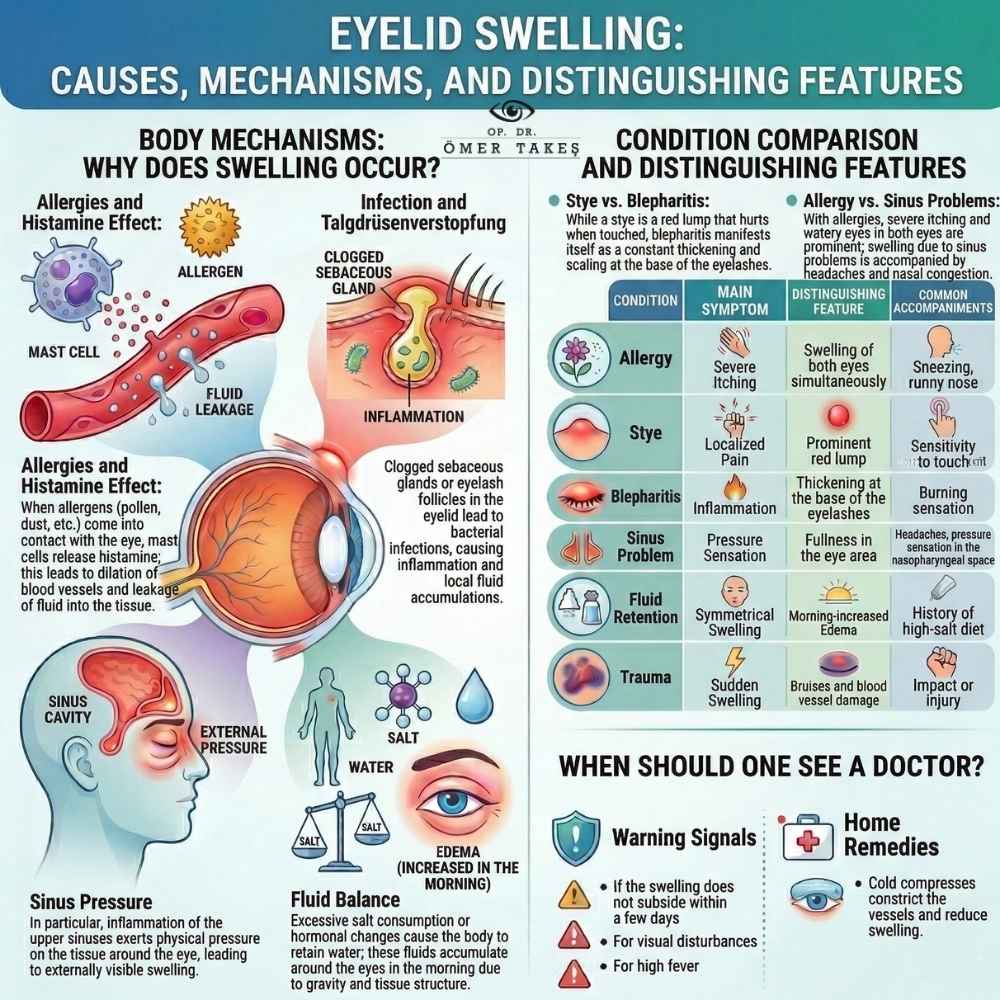
Mechanism: When an allergen comes into contact with the eye, mast cells in the eye release histamine. Histamine causes blood vessels to dilate and leak fluid.
Distinguishing Feature: Severe itching and swelling of both eyes at the same time. It is usually accompanied by a runny nose and sneezing.
2. Infections
Infections of the eyelid, especially conditions like blepharitis (eyelid inflammation) and styes (infection of the glands in the eyelid), can cause swelling. If left untreated, infections can lead to more serious health problems.
Mechanism: Blockages in the eyelid's oil glands or eyelash follicles can lead to bacterial infections. In infected areas, inflammation and fluid buildup cause swelling.
Distinguishing Feature: A stye causes tenderness when touched and a distinct, painful red bump, whereas blepharitis presents as a continuous thickening around the eyelashes.
3. Sinus Problems
Sinus infections can lead to swelling in the areas around the eyes. Especially the inflammation of the upper sinuses can cause swelling and pain in the eyelid. Sinus problems are usually associated with a cold or the flu.
Mechanism: Sinus inflammation can cause swelling by putting pressure on the tissues around the eyes.
Distinguishing Feature: Sinus problems usually come with a headache, nasal congestion, and a feeling of pressure around the eyes.
4. Aging
As we age, fluid retention in the body can increase, and the skin around the eyes becomes thinner. This situation can lead to swelling on the eyelid. With age, the skin around the eyes loses its elasticity, and fluids can accumulate, causing puffiness.
Mechanism: With aging, the skin around the eyes weakens, loses elasticity, and this leads to fluid accumulation around the eyes.
Distinguishing Feature: Visible sagging and puffiness may occur around the eyes as part of the aging process.
5. Fluid Retention
Fluid retention is a condition where the body holds onto an excessive amount of fluid. Not drinking enough water or consuming overly salty foods can cause the eyelid to swell. Hormonal changes can also affect fluid retention. In women, periods like menstruation or pregnancy can cause hormonal fluctuations, leading to eyelid swelling.
Mechanism: Excessively salty foods cause the body to retain water, and fluids accumulate around the eyes, creating puffiness.
Distinguishing Feature: Usually, symmetrical swelling on the eyelids that is more prominent in the morning can be observed.
6. Traumas and Injuries
Swelling on the eyelid can occur as a result of an injury or impact around the eye. Eye traumas can damage blood vessels, leading to swelling. Such injuries usually require quick treatment. You can contact us to book an appointment with our specialists without wasting time.
Mechanism: An impact to the eye area damages blood vessels and leads to fluid accumulation.
Distinguishing Feature: Swelling occurring after an injury is accompanied by bruising and pain.
Symptoms of Eyelid Swelling
The typical symptoms of eyelid swelling are:
- Swelling: A noticeable puffiness or bump can be seen on the eyelid.
- Redness: Along with swelling, redness may also occur on the eyelid.
- Itching or Burning Sensation: Allergic reactions or infections can cause an itching or burning sensation around the eye.
- Watering: Excessive watering of the eyes may accompany eyelid swelling.
- Light Sensitivity: Due to swelling, the eyes can become more sensitive to light.
- Pain: Infections like a stye can cause pain in the eyelid.

How is Eyelid Swelling Treated?
The treatment for eyelid swelling varies depending on the underlying cause. In most cases, swelling on the eyelid can be resolved with home treatment methods. However, in some situations, medical intervention may be required. Here are the common treatment methods for eyelid swelling:
1. Cold Compress
A cold compress can help reduce swelling on the eyelid. The cold constricts blood vessels, alleviating the puffiness. You can apply a cold compress for 10-15 minutes using ice cubes wrapped in a clean cloth or metal spoons chilled in the freezer.
2. Eye Drops
If the swelling on the eyelid is caused by allergic reactions, antihistamine eye drops can be used. These drops relieve the swelling by soothing the allergic response.
3. Antibiotic Treatment
If the swelling is caused by a bacterial infection, antibiotic treatment may be necessary. Your doctor can prescribe the appropriate antibiotic therapy.
4. Surgical Intervention
If the swelling becomes persistent or causes aesthetic concerns, surgical intervention might be needed. Especially aging-related eyelid puffiness can be corrected with a surgical procedure known as blepharoplasty. If you would like to get more information about surgical options, you can consult our expert team.
Natural Remedies Applied at Home
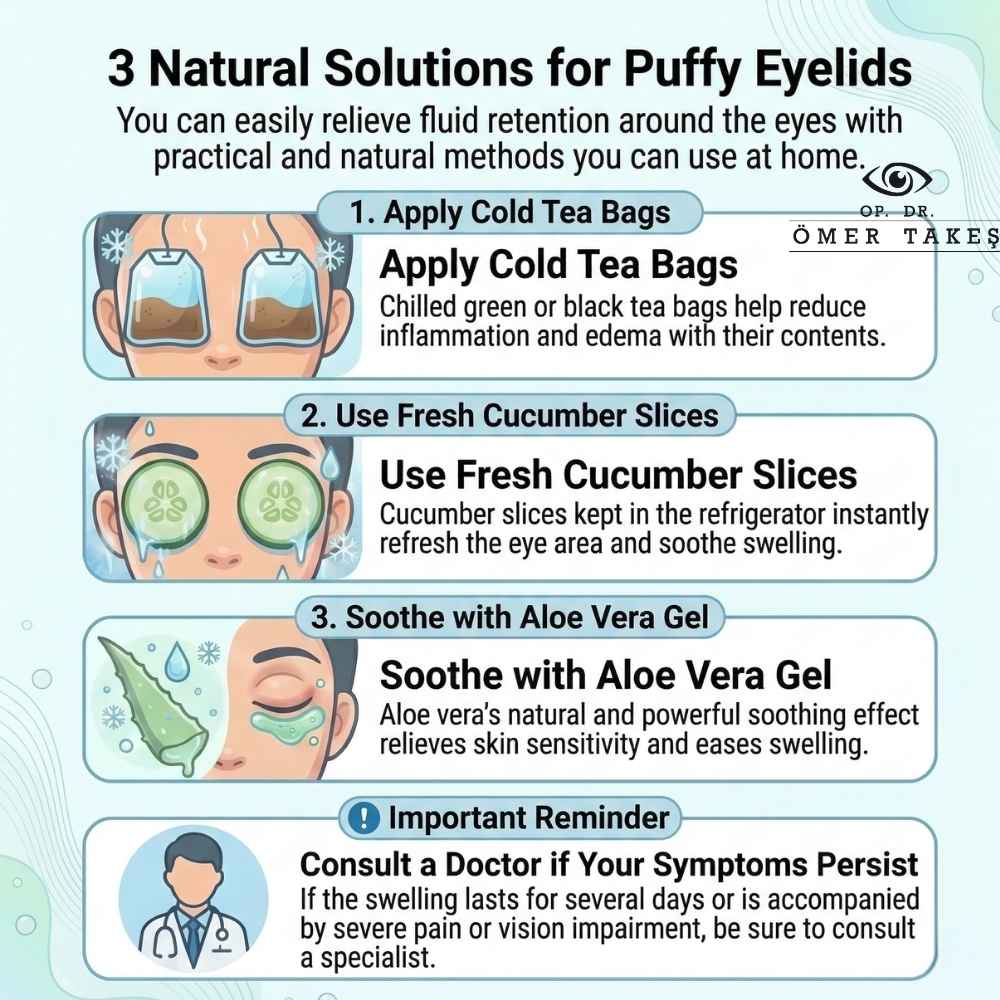
There are also some natural methods you can apply at home to reduce eyelid swelling. Here are a few natural remedy suggestions:
- Tea Bags: Cooling steeped green or black tea bags and placing them over the eyes can help soothe inflammation.
- Cucumber Slices: Placing cucumber slices over the eyes can provide a cooling and relaxing effect.
- Aloe Vera Gel: The soothing properties of aloe vera gel can help alleviate swelling on the eyelid.
When to See a Doctor for Eyelid Swelling?
Swollen eyelids are usually a temporary condition that improves with home remedies. However, it is important to see a doctor in the following situations:
- If the swelling does not improve within a few days
- If the swelling gets worse
- If it is accompanied by severe eye pain, redness, or vision disturbances
- If you have other symptoms like a fever, headache, or general weakness
Conclusion:
Eyelid swelling is generally a temporary condition and mostly heals with simple home treatments. However, persistent or severe swelling may require professional care. To protect your eye health, it is important to adopt a healthy lifestyle, avoid allergens, and get regular sleep. If you have persistent swelling on your eyelid or any other concerning health issues, you can contact us without delay and find the best solution by consulting an ophthalmologist.